
Meditation where you need it.In your everyday life.
Short micro-meditations that gently bring you back to the present.
Just do it.
“I notice one beautiful thing here — a sound, a color, a passing face.”
Just do it.
“Breathing in, I calm body and mind. Breathing out, I smile.”
Made with AI and Love
Why Friendly Ping exists
Mindfulness practices are ancient, well tested, and by now even confirmed by research. The hard part is not knowing them — it is doing them when it matters.
Sound familiar?
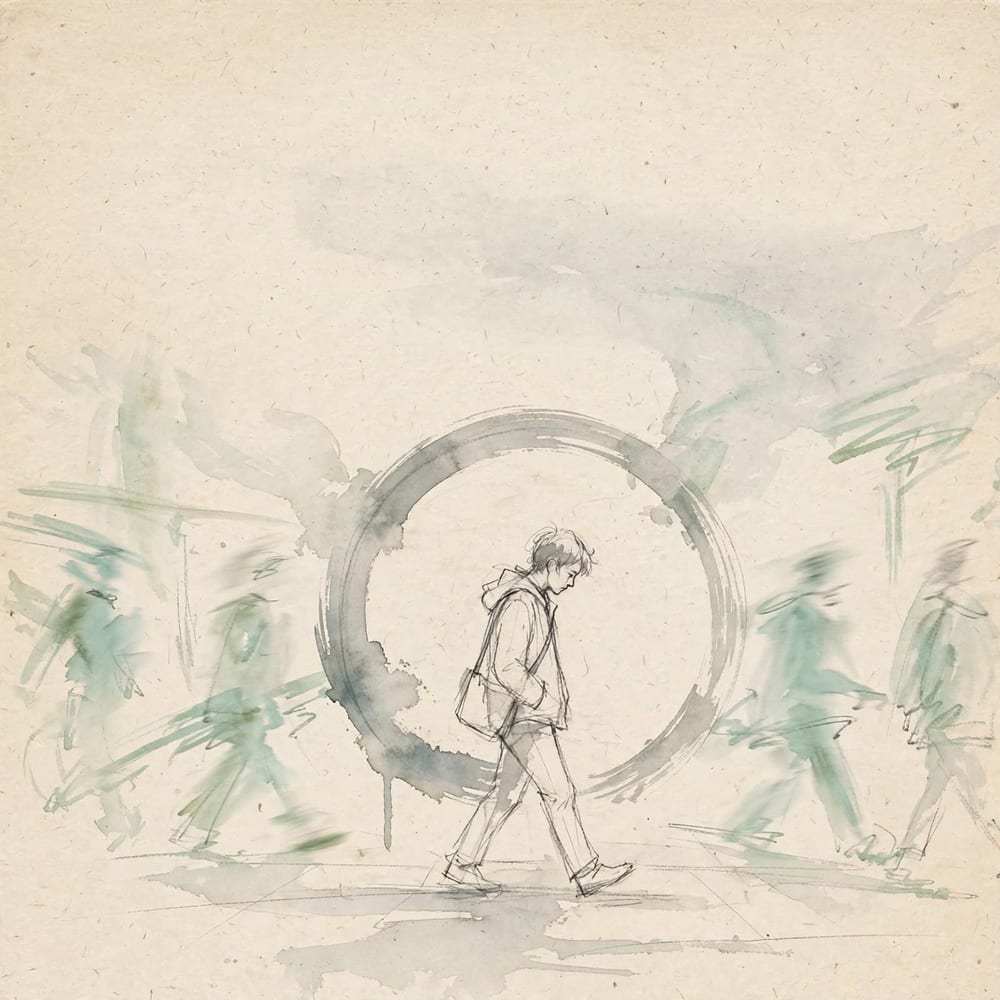
Life is passing you by
The day is over and you were barely there. Up, meetings, screen, bed — somewhere in between you stopped noticing that you were living it.

There is an unrest that stays
Your heart runs faster than the reason for it. Your chest tightens, your breath goes shallow. You know nothing is happening right now — and your body does not believe it.

On the cushion, yes. And after?
Twenty minutes of quiet in the morning, and by half past ten everything is as it was. What you practise stays where you practised it.
Or it is one of these:
- Yesterday’s remark still will not leave you alone — and you keep getting worked up about it.
- You already know how it is — before you have looked. Shame, it could have been nice.
- You are close, and still there is a pane of glass between you.
- You speak to no one as harshly as you speak to yourself. Do you even notice?
- The reaction was faster than you were. The damage is done.
- The good moment was there — you noticed it afterwards. If you really noticed at all.
Answers have been there all along
Wisdom traditions have been working on these questions for thousands of years — Zen, Stoicism, mindfulness, somatics. They found answers. Where it gets difficult in practice is not the knowledge, but the way from knowing into living.
Friendly Ping carries these micro-meditations to where they are needed: into the full day, in seconds, again and again. Not to read about, but to do.
How it works
Mindfulness helps — but only when it reaches everyday life, and that is where it gets lost. Friendly Ping reminds you with a sound, brings the micro-meditation along, and pulls you back into the moment, without a glance at your phone.
1Once
You set the times
A few minutes in the app: when a ping arrives, on which days, with which sound. After that it stays closed.

“I feel this feeling fully — then let it move on.” 2Again and again
The sound brings you back
A gentle tone, and that is all it takes. You pause and do the micro-meditation — twenty seconds, in the middle of whatever is going on. The phone stays where it is.
3Optional
If you want to know more
You can open the ping as well: read the text again and, below it, the deep dive — where the micro-meditation comes from and what is known about it. But you never have to.

Micro-meditations in the middle of a full day. Back to the present, again and again.
Seconds, not minutes
A micro-meditation is made for a full day. No meditation cushion, no preparation, no appointment in your calendar.
Without looking at your phone
The full text sits on your lock screen. Bind one micro-meditation to one sound, and over time the sound alone brings it back.
Another meditation app?
No articles and talks that merely give you something to think about. Friendly Ping goes straight into practice, with concrete micro-meditations. Try it — and see for yourself what shows up.
A bridge from the meditation cushion into your everyday life.
On the cushion, mindfulness is one thing. It gets hard in traffic, in a queue, before the fourth meeting of the day. That is exactly where a Friendly Ping arrives.
Frequently asked questions
What is Friendly Ping?
An app that sends you small micro-meditations through the day — as a gentle sound. Each ping is a micro-meditation of a few seconds that you do wherever you are: in a queue, before a conversation, between two meetings. No cushion, no preparation, no appointment in your calendar.
What can I use Friendly Ping for?
To finally bring your meditation practice into everyday life — and change your life, step by step. You choose which quality you need right now: calming down, letting go, seeing clearly, being grateful and ten more. The app does the rest.
Do I have to open the app for it to work?
Ideally not. The full text is in the notification: you read it on your lock screen, do the micro-meditation, and put the phone away without having unlocked it.
And if you bind one ping to one sound, after a few weeks the sound alone brings the micro-meditation back. Then you do not even need to look.
What makes Friendly Ping different from other meditation apps?
Other apps want you to open them. This one is built so that you have to as rarely as possible. There are no courses to work through, no videos, no talks and no feed — only micro-meditations that happen in the moment they arrive.
And it does not want to replace any of them. A guided meditation needs a quiet half hour; Friendly Ping works in the minutes between — in traffic, in a queue, between two meetings. That is a complement, not a counterproposal: micro-meditation in the here and now, where it otherwise falls away.
I have very little time. How long does a micro-meditation take?
Three to sixty seconds. None needs equipment, none needs preparation, and none of them shows — most you can do in the middle of a conversation without anyone noticing.
How does Friendly Ping help manage anxiety and stress?
Not with a quick fix, but through regular micro-meditations. The pings are short, concrete moves: breathe out for longer, release the jaw, name in one plain sentence what is going on. Do that often enough and you respond differently when it matters — with steadily more distance and less and less running on auto-pilot.
Is Friendly Ping for beginners or experienced meditators?
It was designed for someone who already has some practice and wants the next step: bringing it out of the quiet hour and into the middle of the day. That is where it gets hard, and that is where the app starts.
As a way in it works just as well. If you have never meditated, there is nothing to learn — each ping says in one sentence what to do — and along the way you get to know the wisdom traditions the micro-meditations come from.
Do I need to believe anything to use Friendly Ping?
No. The micro-meditations come from eleven wisdom traditions, from Zen and Stoicism to somatics and Nonviolent Communication — but none of them asks for a conviction. The pings in the library come with a note on where they come from and what is known about them, sourced and without mystification. You can read it or leave it; the micro-meditation works either way.
Will it go off in a meeting?
Only if you let it. For every ping time you set which weekdays it applies to. Everything can be paused with one tap — for a few days or until further notice.
And you never have to schedule Friendly Ping into your calendar: it lives beneath your calendar, running quietly in the background regardless of what is on it — no appointment to coordinate or keep free for.
But there are also very restrained sounds, down to vibration alone, which nobody but you notices. My experience is that a ping enriches a meeting rather than disturbing it: you go inward for a moment without anyone noticing, and come back more aware — the whole room benefits from that.
Is Friendly Ping free?
The basic version is free for good: up to 2 pings a day in the simple view, plus the Mindfulness Bell and the Meditation Timer.
After setup, you get 14 days of Premium as a gift — every feature, no purchase and no automatic charge. After that, you simply continue for free.
Premium unlocks everything else: more pings, all qualities and sounds, situations, background videos and the full view. It costs €3.99 a month or €59.99 once, for good (prices may vary by country). As a launch gift: if you ever end your monthly subscription, I will give you the time you were subscribed once more, for free.
If you cannot afford it right now, I will give you free access — just write to me at info@friendlyping.app. No explanation needed. – Stefan
Does this replace a real meditation practice?
No, and the app does not claim to. Twenty minutes of sitting still is a different thing from ten seconds at a red light. Friendly Ping is the bridge between them.
Above all it is meant for the moment when you have forgotten your practice. That is exactly when it is needed most — and exactly when it does not occur to you by itself.


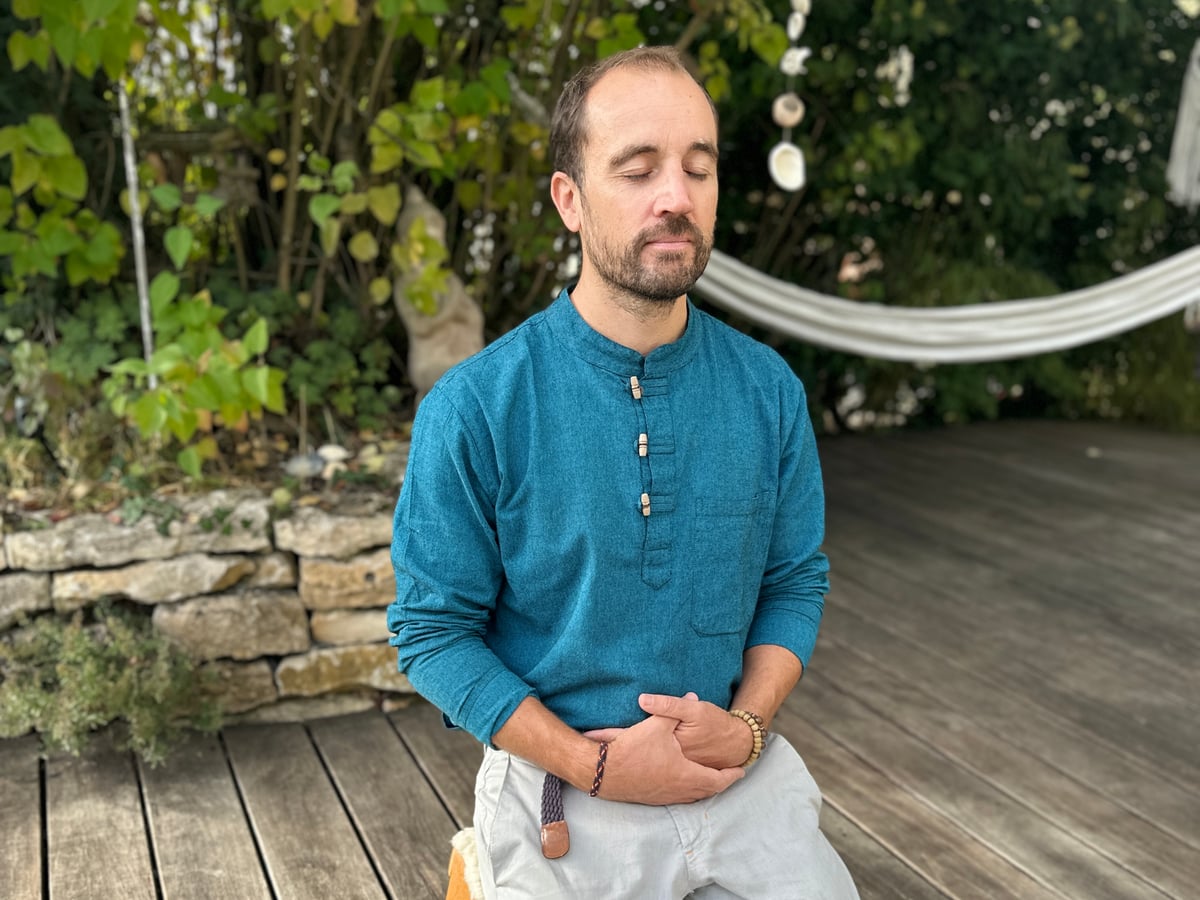

Pause in the middle of your day — and move on with more clarity
Bring mindfulness into the middle of your life. Just try it.