
Mindfulness
Mindfulness is the capacity to notice present experience deliberately, without immediately judging it. The term translates the Buddhist sati; since 1979 the practice has been taught and studied outside its religious frame — it is the secular tradition of this collection.
- Your Friendly Ping
Today, 07:15
Don't read it. Just do it.
“I name 3 things I can hear right now — without judging them.”
Deep DiveMoreSound is the ideal anchor for mindfulness because it is always present, cannot be controlled, and requires no physical adjustment. Jon Kabat-Zinn chose sound as a primary anchor in MBSR because it requires no technique: sounds arise on their own and pass. The instruction 'without judging them' addresses the mind's automatic sequencing: sound becomes noise, noise becomes irritation — in a chain that bypasses direct experience entirely. Labelling sounds (traffic, breathing, the hum of a device) uses verbal processing as a bridge between automatic reactivity and conscious recognition. The neuroscientist Judson Brewer calls this 'noting': labelling an experience activates prefrontal areas that modulate the amygdala's reactive response. Three sounds are enough to discover that the moment is already full.
Ping done - Your Friendly Ping
Today, 09:40
Don't read it. Just do it.
“I find one living thing near me and watch it for 10 seconds.”
Deep DiveMoreE.O. Wilson proposed biophilia — the innate human affiliation with other living things — as an evolutionary inheritance: for most of human history, close attention to living organisms was a survival requirement. Research by Rachel and Stephen Kaplan on restorative environments shows that contact with natural elements (plants, animals, water, soil) measurably reduces cortical arousal and restores directed attention even in brief exposures. Even a plant on a desk or a bird outside a window activates this restorative response. The practice of watching a living thing also naturally induces a particular quality of attention: interested non-interference. You cannot control what the plant or insect does. You can only observe. This is the contemplative posture in miniature.
Ping done - Your Friendly Ping
Today, 12:30
Don't read it. Just do it.
“I let the first bite be pure pleasure. I taste it all the way through.”
Deep DiveMoreJon Kabat-Zinn opens his MBSR course with a single raisin, eaten with total attention — and participants routinely report tasting more in that raisin than in whole meals of ordinary eating, a demonstration of how much experience is normally skipped. Hedonic adaptation gives the first bite special status: pleasure responds to change, so the opening moments of any food carry most of its joy, and attention placed there is placed where the yield is highest. Zen formalized the same insight in ōryōki, the meal taken as complete practice, gratitude and taste inseparable. Pleasure fully received satisfies sooner than pleasure half-noticed — an economy worth knowing.
Ping done
A gap between stimulus and response
Noticing that you are angry does not end the anger — but you are no longer only the anger. In that gap sits a choice that was not there before.
Attention is finite
It is not a posture but a resource that measurably depletes and recovers. That turns how you handle it into a practical question.
Nothing to believe
Three conditions — on purpose, in the present moment, non-judgementally. No membership, no worldview, no word you would have to look up.
What mindfulness is
In its present form, mindfulness is the youngest of these traditions. It is what remains when the Buddhist practice of sati is lifted out of its religious frame and only the method is kept: deliberately turning attention to the present moment, and not immediately judging what you find there.
Jon Kabat-Zinn’s classical definition is deliberately plain: awareness that arises through paying attention, on purpose, in the present moment, non-judgementally. Three conditions, nothing more. No belief, no membership, no worldview.
Nor is mindfulness a relaxation technique, however often it is sold as one. It regularly makes unpleasant things more noticeable than before. That is not a fault of the method but its purpose: you can only work with what you can see.
The secular tradition here
Every other tradition on this site brings a lineage older than science — a school, a text, a transmission. This one does not. Mindfulness in its present form is a child of the twentieth century, and it grounds its effect in measurement rather than authority. That is what makes it the way in for anyone who wants nothing to do with Buddhism, Sufism or Christianity: switch off everything spiritual and a complete, usable practice remains.
So this page carries a second family of pings that cite studies rather than discourses. Nicholas Carr described how habitual internet use trains the pathways of distraction. Adrian Ward showed in 2017 that the mere presence of a silent, face-down phone on the desk measurably lowers working memory — some part of the mind stays on call for it. Thomas Borkovec found that worry responds to appointments: deferring it to a scheduled slot reduces overall worrying. The sociologist Hartmut Rosa described acceleration as the defining structure of the present — not simply doing more, but the pervasive sense of falling behind, detached from any real urgency.
These are not spiritual claims. They are measurements, and they carry the practice just as well — in one respect better, since they assert nothing that cannot be checked. They keep the whole collection honest, and they are a reminder that the other ten traditions do not draw their effect from being believed either.
What links the two families is not coincidence but subject matter. Kabat-Zinn, Carr, Ward and Rosa are all describing the same thing: attention as a scarce resource, and what happens when you lead it deliberately instead of letting it lead you.
What mindfulness gives this app
Mindfulness is the tradition with the fewest prerequisites. A Stoic ping presupposes a particular view of control; a Buddhist one a willingness to read impermanence as consolation. A mindfulness ping presupposes only that you are currently capable of noticing.
And it is the reason this app makes sense at all. Mindfulness is a state that does not hold. It decays within minutes, and that is not a weakness of the practitioner but a property of the thing. What helps is not more effort but more occasions. A sound that arrives on its own delivers exactly that.
Key figures in the Friendly Pings
A list without monks and without millennia: a physician who brought the practice into the clinic, and beside him researchers who have measured attention, fear and habit.
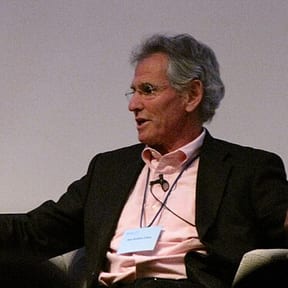
Jon Kabat-Zinngeboren 1944
Gründete 1979 die Stress Reduction Clinic in Massachusetts und entwickelte MBSR. Seine Entscheidung, die buddhistische Terminologie konsequent wegzulassen, machte Achtsamkeit erst klinisch anwendbar — und erforschbar.
Image: Mari Smith · CC BY 2.0 · Wikimedia Commons
Judson Brewergeboren 1974
Psychiater und Suchtforscher. Er wies nach, dass Achtsamkeit das Default Mode Network dämpft — jenes Netzwerk, das beim Grübeln und Abschweifen aktiv ist.
Image: Judsonbrewer · CC BY-SA 4.0 · Wikimedia Commons
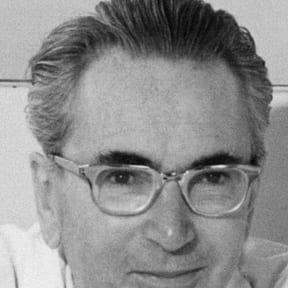
Viktor Frankl1905–1997
Wiener Psychiater und Überlebender der Konzentrationslager. Der ihm zugeschriebene Satz vom Raum zwischen Reiz und Reaktion ist in dieser Form nicht belegt — der Gedanke steht aber sehr wohl in seinem Werk.
Image: Prof. Dr. Franz Vesely · CC BY-SA 3.0 de · Wikimedia Commons
Stephen Kaplan1936–2018
Umweltpsychologe, dessen Attention-Restoration-Theorie erklärt, warum ein Blick aus dem Fenster erholt: Natur bindet die Aufmerksamkeit mühelos und lässt die gerichtete Aufmerksamkeit sich erholen.
Steven Hayesgeboren 1948
Begründer der Akzeptanz- und Commitment-Therapie. Sein Begriff der kognitiven Defusion — einen Gedanken als Gedanken sehen statt als Tatsache — taucht in mehreren Pings auf, meist ohne genannt zu werden.
Martin Seligmangeboren 1942
Mitbegründer der Positiven Psychologie. Seine Übung „drei gute Dinge" gehört zu den am besten belegten Interventionen überhaupt — und steht hinter den Dankbarkeits-Pings.
Peter Gollwitzergeboren 1950
Zeigte ab 1993, dass Vorsätze der Form „Wenn X, dann Y" deutlich zuverlässiger umgesetzt werden als allgemeine Absichten. Deshalb sind viele Pings als Bedingung formuliert und nicht als Aufforderung.



.jpg)
This selection follows the app, not the tradition: these are the people actually named in the deep dives of the Friendly Pings, ordered by how often. Centuries of practice cannot be represented by a handful of names, and that is not the claim here.
What these pings aim at

Pause in the middle of your day — and move on with more clarity
Bring mindfulness into the middle of your life. Just try it.